
Introduction
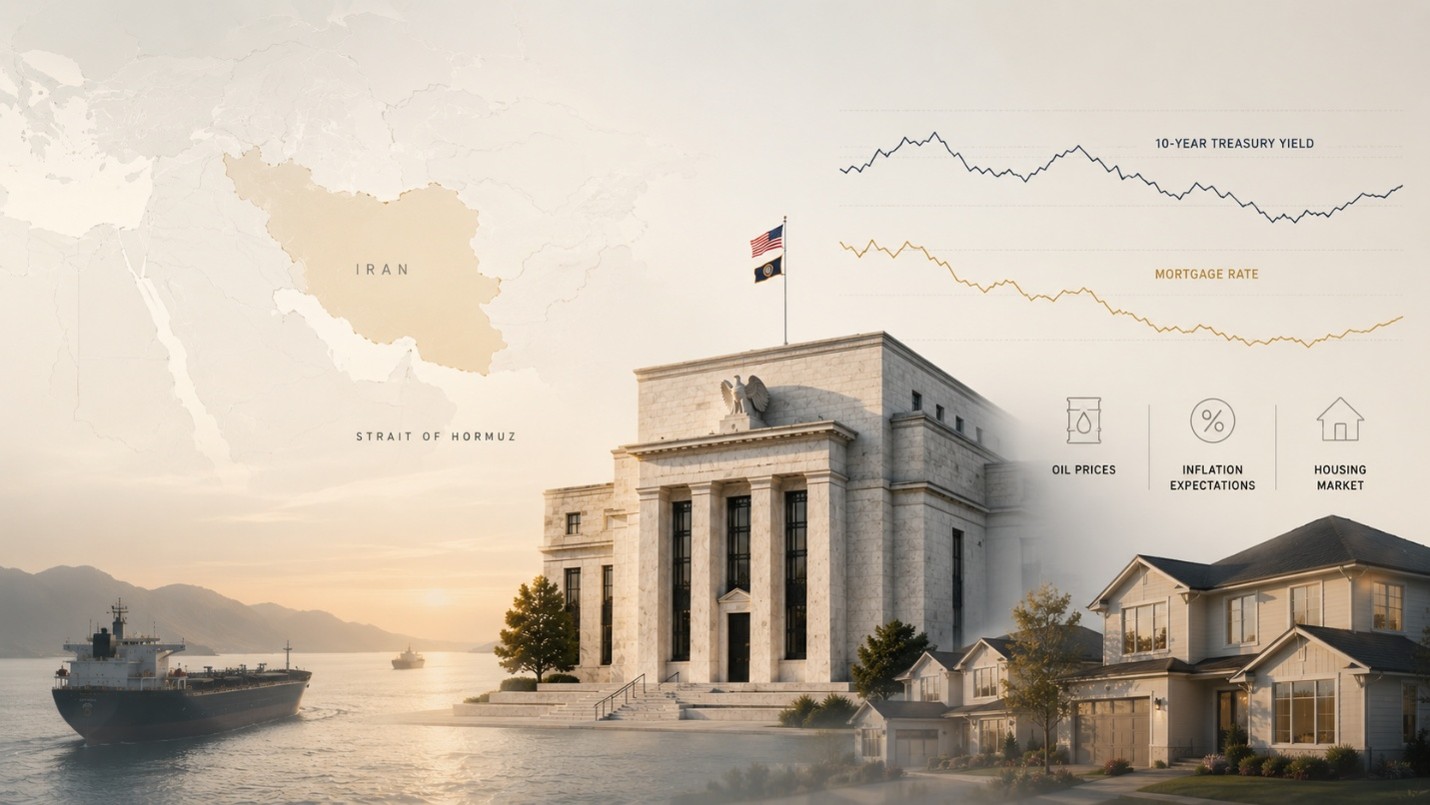
Forecasting interest rates has always been a challenging endeavor. Forecasting interest rates during periods of geopolitical uncertainty is substantially more complex. The reality is that no one knows precisely how events involving Iran will unfold. Markets are not pricing a single predetermined outcome but rather a range of potential scenarios with varying probabilities.
The most important question is not whether conflict exists. The most important question is whether the conflict materially disrupts energy markets, global trade flows, investor sentiment, or inflation expectations. The answers to those questions will largely determine where interest rates move over the next twelve to eighteen months. For mortgage professionals and real estate investors, understanding these relationships may provide a meaningful strategic advantage in navigating an uncertain environment.
Why Oil Prices Matter More Than Most Real Estate Professionals Realize
The most immediate economic risk associated with a broader Iran conflict involves energy markets. Iran sits adjacent to one of the world’s most strategically important shipping corridors. A significant percentage of global oil exports pass through the Strait of Hormuz. Any meaningful disruption to shipping activity can have a direct and substantial impact on global energy prices.
Oil remains deeply embedded within the global economy. Higher energy costs affect transportation, manufacturing, agriculture, construction, consumer goods, and virtually every supply chain. When energy prices rise significantly, inflationary pressures often follow. This creates a genuine challenge for central banks. If inflation accelerates because of energy shocks, the Federal Reserve may become less willing to aggressively lower interest rates—even if economic growth begins to soften. For mortgage borrowers, that dynamic matters enormously. Mortgage rates often remain elevated when inflation concerns persist.
The Federal Reserve’s Dilemma
The Federal Reserve’s primary challenge over the next twelve months may involve balancing two competing risks: inflation on one hand, and economic slowdown on the other. Under normal circumstances, weakening economic growth would encourage lower interest rates. However, geopolitical conflicts can create a more complicated and less predictable environment.
Imagine a scenario where oil prices rise sharply, consumer spending slows, business investment weakens, and inflation remains elevated. This combination creates what economists often describe as a stagflationary environment. In such circumstances, the Federal Reserve faces difficult policy trade-offs. Cutting rates too quickly risks reigniting inflation. Keeping rates elevated risks slowing economic growth further. Mortgage professionals should recognize that the path of interest rates may be far less predictable than many market participants currently expect.
Why Mortgage Rates May Not Follow Fed Rate Cuts
Many consumers assume mortgage rates move directly and immediately with Federal Reserve policy. In reality, the relationship is far more nuanced and mediated by multiple market forces. Mortgage rates are influenced heavily by Treasury yields, inflation expectations, investor sentiment, global capital flows, and credit market conditions. Even if the Federal Reserve reduces short-term rates, mortgage rates may remain elevated if investors believe inflation risks persist or if risk premiums increase.
This distinction becomes particularly important during periods of geopolitical instability. Investors often demand higher yields when uncertainty increases. As a result, mortgage rates may not decline as quickly or as fully as borrowers anticipate. This has significant implications for housing demand. Many prospective buyers have delayed purchases while waiting for lower financing costs. If mortgage rates remain stubbornly elevated despite Federal Reserve easing, housing affordability challenges may persist longer than many currently expect.
The Safe-Haven Effect and Treasury Markets
Not every consequence of geopolitical conflict pushes rates higher. There is another important dynamic that deserves careful attention. During periods of global uncertainty, investors frequently seek safety. Historically, United States Treasury securities have served as one of the world’s preferred safe-haven assets. When investors purchase large quantities of Treasuries, bond prices rise and Treasury yields decline. Lower Treasury yields can create meaningful downward pressure on mortgage rates.
This introduces an interesting counterbalance. While rising oil prices may contribute to inflationary concerns, safe-haven capital flows may simultaneously support lower long-term yields. The resulting interest-rate environment may ultimately depend on which force proves stronger: inflation fears or flight-to-safety demand. Markets will likely spend the next year attempting to resolve that tension.
Housing Markets Face a New Layer of Uncertainty
The housing market has already experienced substantial adjustment over the past several years. Higher borrowing costs have reduced affordability and slowed transaction volume in many regions. A prolonged geopolitical conflict introduces an additional layer of uncertainty. Developers may face higher construction costs if energy prices rise. Consumers may become more cautious if economic confidence weakens. Mortgage lenders may encounter more volatile rate environments.
At the same time, demographic trends continue supporting long-term housing demand. Population growth, household formation, and migration patterns remain powerful structural forces. This means housing markets may experience regional divergence rather than uniform national outcomes. Markets with strong employment growth and favorable migration trends may remain resilient even if national activity softens.
What Real Estate Investors Should Watch
Investors should focus on several key indicators over the coming year:
- Oil prices — Sustained energy price increases could influence inflation expectations and Federal Reserve policy responsiveness.
- Treasury yields — The direction of the 10-year Treasury remains one of the most important leading indicators for mortgage rates.
- Labor market performance — A weakening labor market would increase pressure on policymakers to ease monetary conditions.
- Consumer confidence — Housing demand often responds quickly to changes in economic sentiment and perceived financial security.
- Geopolitical developments — The scope, duration, and economic consequences of the Iran conflict will ultimately determine its influence on financial markets and real estate.
Industry Implications
Mortgage lenders may need to prepare for an environment characterized by ongoing rate volatility. Pipeline management, secondary market execution, and borrower communication strategies will become increasingly important. Title agencies should anticipate continued variability in transaction volume. Markets with strong migration and employment trends are likely to outperform regions more dependent upon rate-sensitive activity. Developers may encounter challenges related to financing costs, construction expenses, and project underwriting assumptions. For investors, flexibility and scenario planning may become competitive advantages. Organizations capable of adapting quickly to changing economic conditions will likely outperform those relying on static assumptions.
Practical Takeaways
Real estate professionals should avoid making strategic decisions based solely on expectations of rapid rate cuts. Mortgage rates may remain influenced by inflation risks, Treasury market dynamics, and geopolitical developments in ways that defy simple forecasts. Investors should stress-test acquisition models using multiple financing scenarios. Lenders should prepare borrowers for continued volatility rather than promising a straightforward decline in rates. The most successful organizations will focus on long-term fundamentals while remaining agile enough to respond to changing market conditions.
Looking Ahead
The next twelve months may prove to be one of the most complex environments for interest rate forecasting in recent memory. The interaction between geopolitics, energy markets, inflation, Federal Reserve policy, and global capital flows creates a highly dynamic and interdependent landscape. While many forecasters anticipate gradual easing of monetary policy, the path forward is unlikely to be linear. Unexpected developments can rapidly alter market expectations. The organizations best positioned for success will be those that remain disciplined, informed, and adaptable.
Conclusion
The Iran conflict is not merely a geopolitical story. It is a potential economic catalyst capable of influencing inflation, energy markets, investor behavior, Treasury yields, mortgage rates, and housing demand in interconnected ways. While predicting exact outcomes remains impossible, understanding the mechanisms through which geopolitical events affect financial markets provides valuable perspective and strategic context. For mortgage professionals, investors, developers, and real estate executives, the coming year will likely require heightened attention to both domestic economic indicators and global developments. Interest rates will not be determined solely in Washington. They may also be influenced by developments occurring far beyond America’s borders.
Frequently Asked Questions
Q: Could the Iran conflict cause mortgage rates to rise?
A: Potentially. If the conflict significantly increases oil prices and inflation expectations, mortgage rates could face upward pressure through higher Treasury yields and increased risk premiums demanded by investors.
Q: Why do oil prices affect interest rates?
A: Higher energy costs can contribute to broader inflation, which may influence Federal Reserve policy decisions and investor expectations regarding future inflation and monetary policy. Energy shocks create complex trade-offs for central banks.
Q: Will Federal Reserve rate cuts automatically lower mortgage rates?
A: No. Mortgage rates are influenced by Treasury yields, inflation expectations, global capital flows, and credit market conditions—not solely by Federal Reserve policy. Geopolitical uncertainty can decouple mortgage rates from Fed actions.
Q: Can geopolitical conflicts ever lower interest rates?
A: Yes. Investors often seek safe-haven assets during periods of uncertainty, which can drive Treasury prices higher and yields lower—creating downward pressure on mortgage rates that may partially offset inflationary concerns.
Q: What should real estate investors watch most closely?
A: Oil prices, Treasury yields (particularly the 10-year), labor market conditions, inflation data, consumer confidence metrics, and geopolitical developments themselves are all critical indicators requiring ongoing monitoring.